Glitch is a tech+art residency run by some friends. I attended several years ago, 2022, with some essays and drawings to document the thing. I was there as the resident governance nerd.
- The first “Making all art collaborative art” is about how new technologies are making massively multi-artist art richer.
- “Qualities are now quantities” is a reflection about was about new data representations makes AI special.
- “Breaking factory artists, democratizing factory art, and making everyone a labor exploiter” with designer Wes Chmielinski, was about the future of factory art in an age the exploitative art factories have been democratized.
- “Artificial scarcity for personal digital value” was about how NFTs change the scarcity, and thus the value, of art.
- “What is the potential of metaverses to expand consciousness?” is exactly what it sounds like. I think the Internet has literally expanded human consciousness, in the sense of making us more aware of how different people are from each other, and so showing us the variety of human experience. Virtual worlds could push that further.
- Last are “The artist as financial dom” and
- “When does the art market crush culture, and when does it seed it?” both about the new economics of digital art.
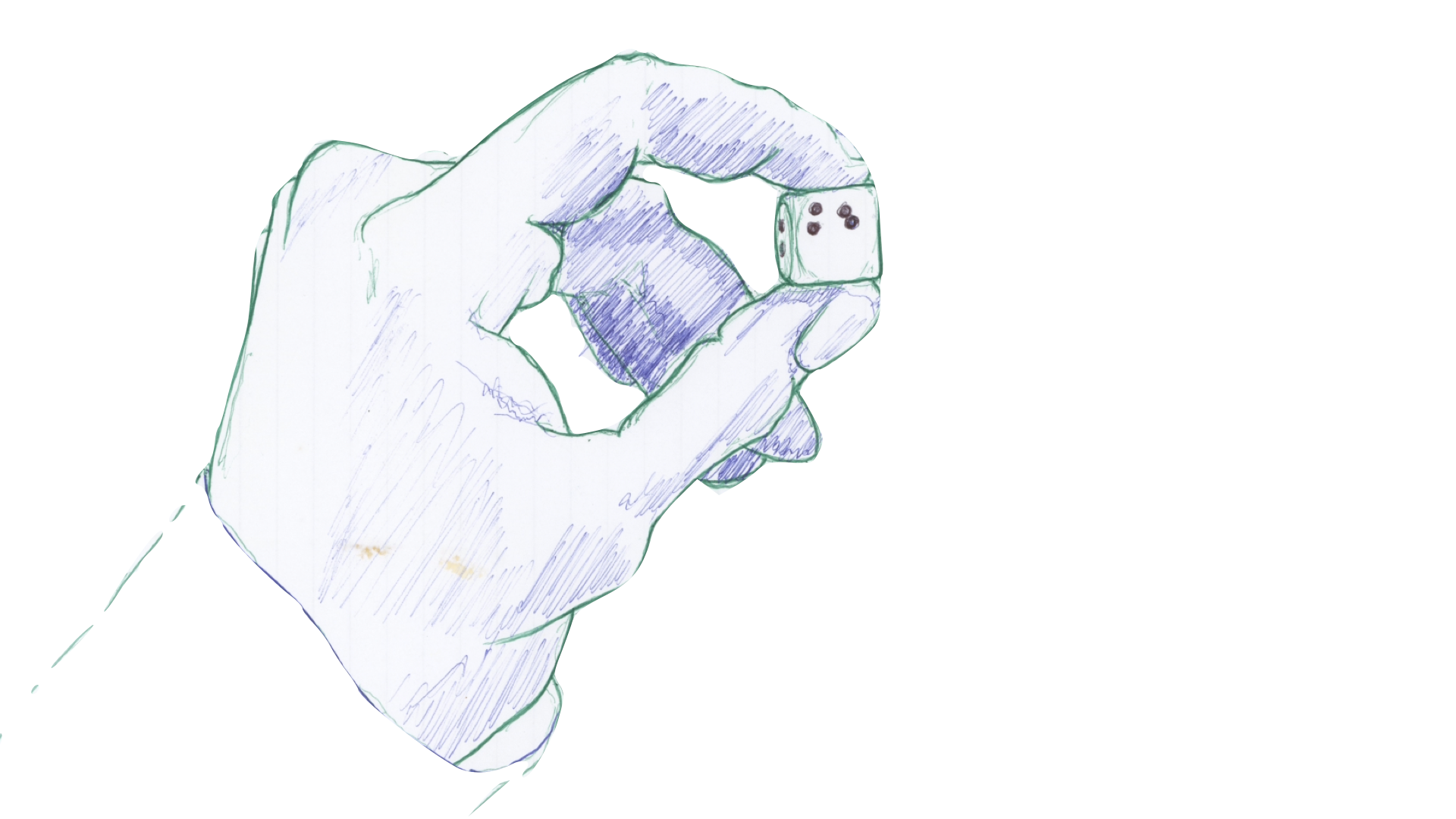
- I also did the doodles.
Making all art collaborative art
How can we be more together than the sum of our contributions? It’s a question that is fundamental to social design and analysis, but surprisingly vital in art as well. Getting past the cult of individual genius and fame, artists, being people, want to collaborate and work and learn together, and find new deeper ways to engage and absorb their audiences, and even to involve and learn from and abolish the barriers between them and their audiences.
So the vision is great, but in practice? In practice, a lot of collaborative art, at any kind of real scale, is weak. How do dozens or hundreds or thousands or artists work together to create something strong and coherent, that expresses a new idea, that is more than sum of the minds and ideas and abilities of all of its contributors? Collaboration is core to some arts: music and acting come to mind. From a band to an orchestra, music is inherently collaborative and much of the joy of music is doing it together. In my mind it is what they can attain that sets the bar for what visual art, literature, and others should aspire to.
Early digital collaborative art projects like thesheepmarket.com —10000 crowdsourced drawings of sheep in a matrix (not even a collage)— are exactly equal to the sum of their contributors. The work is a gallery of 10000 works. And other technologies for collaborative art create works that are less thanthe sum of their parts. The exquisite corpse is a drawing or story that everyone contributed a line to. It can be interesting, it can give you ideas, but it is rarely coherent, and never, from what I have seen, be more brilliant than the sum of its contributors. Can music’s living moment-to-moment joy and sense of something bigger ever be brought to writing, painting, or drawing? To architecture? Or programming?
I’m a lot more optimistic today than I ever have been. Louis Parker’s ponzi haiku scheme patches exquisite corpse by using chain mechanisms and protocols to enforce a haiku’s metrical constraints, and to incentivize convergence on a stable output. One key is that contributors don’t author the haiku in the order of writing: each of the poem’s 5+7+5=17 syllables gets written and overwritten in parallel, merging writing and editing, and creating room for structural evolution.
Artists Ruth Catlow and Kalen Iwamoto push this further with a whole range of experiments in mechanistically and algorithmically constrained collective art. Ruth’s approach blurs the line between art and LARPing (which still a bit hierarchically relies on a dungeon master to maintain unity of vision), while Kalen solves the problem of incoherence in two ways. She partly makes it not a problem by training herself to see the depth in the collective’s seeming disharmony. She also solves incoherence by making it the question: when people have choice in the piece, what will they want, and what does it look like them wanting different things?
Vanessa Rosa takes a different approach entirely to enabling an integrated and synergistic approach to collective visual art. They are leveraging the recent revolution in generative art to accomplish the same thing in a different way. While artists around the world see DALL·E and other advances and start to fear for their jobs, these are using them to lower the timescale of artistic production and the barriers to artistic collaboration. Vanessa’s demo overlays video with stable diffusion distortion steered by crowdsourced prompts, and her own work to incorporate the ideas of others into this and that video still. As the software smooths over edited stills, it harmonizes between styles with continuous transitions. Their approach takes the problem of incoherence across contributors and solves it by letting the algorithm build a visually mysterious, puzzling, absorbing, psychedelic bridge. A lot of the beauty of the video is that it transitions so beautifully between very different themes that they you almost can’t experience them as out of harmony.
So many of the arts continue to be duped by the cult of individual genius. What if that’s a cope, or sour grapes? What if the only reason literature and painting reject collaboration is because they never had a chance. What if the genius worth working toward is that of the collective? Building meaning with others is deeply human, and as much of a late-adopter and skeptic as I am about so many of these technologies (“Is any of this really actually new?”), a message I took loud and clear from many people today, in many different ways, is that we can dream a dream in which every art is the orchestra of all of us.
Qualities are now Quantities
In my area of the social sciences there is an ideological tension between the qualitative and the quantitative. The qualitative is rich, contextual, non-reducible, ineffable. The quantitative is precise, concise, superficial. If you are a qualitative researcher, you admire ethnography and interview, and you criticize quants for being reductive and trying to generalize and paper over vast cultural differences. If you are a quant then you admire generality, formality, and the power of statistics, and you criticize qualitative research for being subjective, biased, and so tied up in context that it doesn’t really say anything at all.
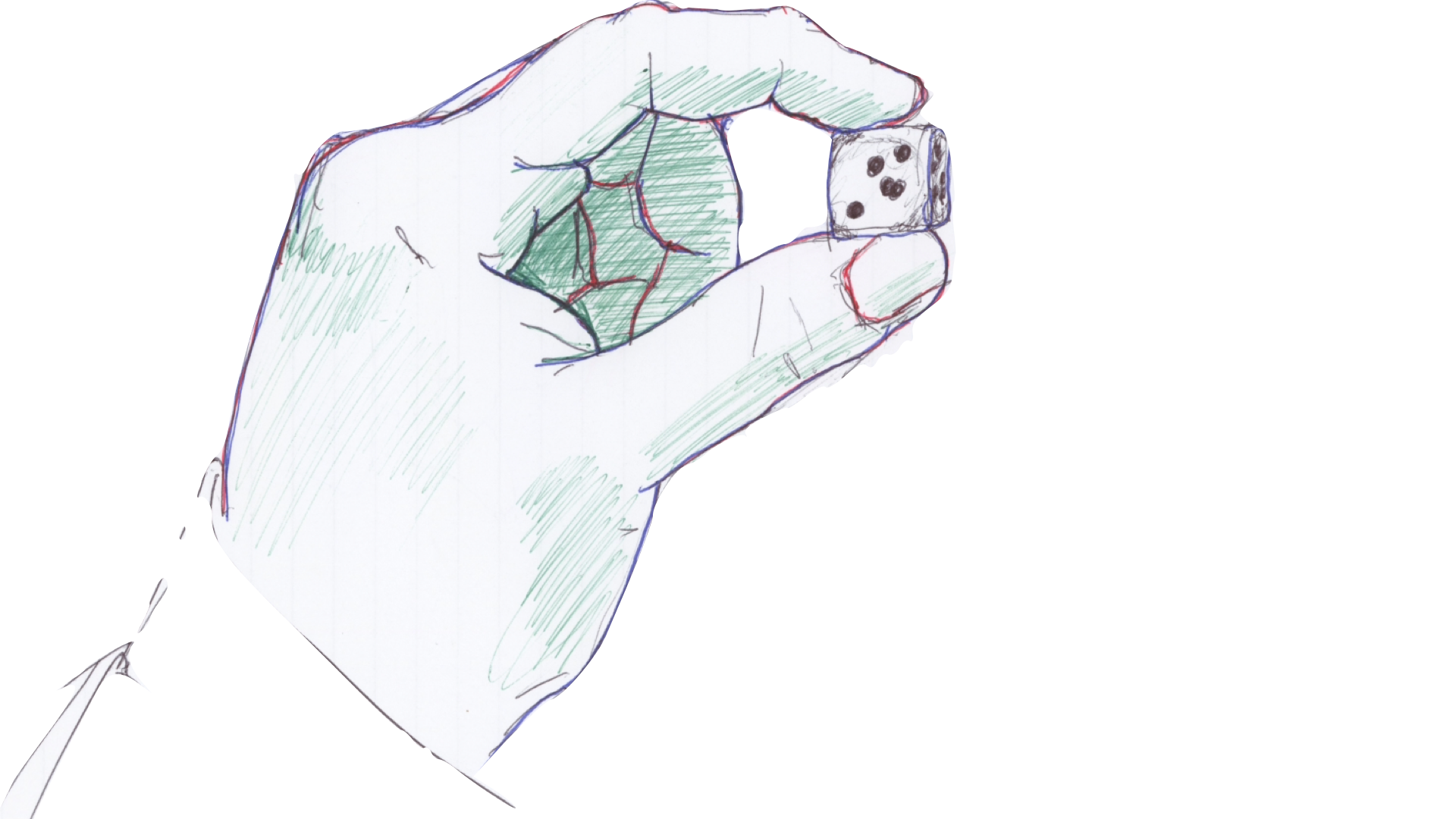
And as qualitative scholars work to put more and more distance from the quants, the quants are always trying to close that distance. They usually do it by taking a thing they were describing with one number and using two, then three. “I will describe the experience of this sculpture in a model that represents its weight, height, and color.” It’s absurd
but it’s a model that embeds each piece in a 3-dimensional meaning space where it can be related to other near neighbors on those dimensions. For all its faults it can sometimes get at the truth, however indirectly and imperfectly. And if it doesn’t, just increase the quantity of quantities you’re relying on. That may sound ignorant, but it is working.
Midjourney, DALL-E, Eden, Stable Diffusion have an uncanny access to qualitative knowledge about the worlds of words and images. They are built on neural networks whose outputs can be represented as points in multi-million dimensional meaning spaces. Those points have coordinates, which are just long lists of numbers. If you use enough numbers, the quantitative becomes qualitative. And it’s true: when you are using millions of numbers to describe an image or a text or a video, no one number means anything. None of the dimensions maps clearly to a single meaningful features. The ideas of weight, height, and color aren’t stored in the first, second, or third dimension of the millions, but in unintuitive and uninterpretable combinations of those numbers. The resulting vectors are rich, contextual, non-reducible, and ineffable. They are subjective, biased, and so tied up in context that even though they clearly mean something, it isn’t clear at all what that meaning is. They are qualitative.
Breaking factory artists, democratizing factory art, and making everyone a labor exploiter. w/ Wes Chmielinski
Today we have the idea of the most influential artists. Influential artists make commercially legible art. Making commercially legible art incentivizes prolific output. Prolific volume isn’t traditionally realistic without the Warhol model of factory art. And so we see artists like Ai Weiwei, Shepard Fairey, Jeff Koons, Rafiq, and so many others running factories (studios) around the world with dozens of artists working for them as wage laborers and passing their work up to get signed and sold by the boss. They get a set of tools and a general concept and work in isolation to produce art to their artist’s spec.
It’s tempting to ask “What if art wasn’t like that? What if people just did their own work?” I’ll ask the other question. What if everyone was like that? What if every artist ran a factory? What if all you do was run a prompt and a team of intelligences worked behind the scenes to produce art for you to that specification? Midjourney makes everyone a factory artist. And if the output is off, you can tweak the prompt, with instructions on style, content, themes, and so on. The flipside of making everyone a factory artist, of course, is that these technologies may eventually put the wage laborer artists out of work.
Digital and generative art generally are opening doors, changing models, and democratizing factory art, and the process is accelerating within the NFT art scene. NFT artists define a basic vocabulary and semantics for the work and then randomly generate thousands of variations on the theme, again relying on automation to give themselves the power of the factory, and publicly embracing big art’s dirty secret, that it’s all mass produced. Through that lens, NFT artists are an encouraging return to a Warhol world in which art is crass out loud.
Social technologies are permitting the same transformation: giving all artists access to factories, so they can all keep up with factory artists, and all become exploiters of labor. Artists on crowdsourcing platform Fiverr can sub out a subtask to other artists, who themselves might sub out further from there. From the most active artists on Fiverr you can reach out 24/7 for help and will find your work flip while the artist was working on 50 other jobs simultaneously. Factories.
It isn’t the best news that our only relief from the injustice of factory production is to give everyone access to automated factories, but in terms of the freedom they permit, we get the fundamental contributions of social and other technologies to art, that they make the good better and the bad worse.
Artificial scarcity for personal digital value. WHY?
Can we only use NFT’s to make wealth distribution across artists more uneven? For reinforcing the dynamics of commercial art that undermine appreciation, meaning, and community? Or can new mechanisms, as they reinforce old economies, create new ones? Primavera crystalized it well with a guiding question: Why are we taking the infinite potential of the digital world and using it to reimplement scarcity? We need to dream better dreams.
I certainly do. I’ve come with very little sense for what NFTs can bring to art besides a vast speculative market. But I’m getting a sense of the possibilities. Breaking private property and creating collective property creates positive meaning when the collective property stays healthy.
Why collective property? Collective property is harder to manage because no one owns it. This means that the health of shared property is a sign of trust. I see it in the public tray of cookies. If everyone is there for themselves, you’ll get a race to the bottom of the cookie jar. If there is a strong sense of mutual care, cookies will still go, but slowly, following a half-life kind of decline: 12, then 6, then 3, then 1, then half, then a quarter. At smaller gatherings, shared resources stay shared and get preserved, people even save food for each other. As gatherings get larger, other dynamics start to pop up. Isaac reports that one of the scarcest resources at the snack tables of a large impersonal conference like Devcon is water. It always runs out, and it goes quickly when it appears. People take without regard for the needs of others. The same can happen with passes to evening events like parties. They should be a public good but people hoard them. These are examples outside of mechanism, but they illustrate the role that community resources play as a thermometer of community health.
The same sense of trust can be implemented online. Imagine a digital common pool resource. An art collective mints 1 NFT per member. They get their value from the value of the collective’s assets, but any member can sell any number of them anonymously. Imagine now a group with so much trust that they are just held, and never sold by anyone. The absence of defectors is a telling signal of the collective’s internal trust. The amount of cash is the same but the subjective sense of community and trust has gone up. As their profile rises, the temptation increases with the feeling trust for sticking to the norm. And even if something is sold, if sales happen at a slow and declining rate, the meaning is different than if they are sold all at once by a single defector, or in a race to the bottom.
Another generator of collective value is the gift economy, specifically Kula rings of the Trobriand islands. This describes a ritual of gifts among communities on different islands, (https://0w.uk/tvbfi)
> Participants travel at times hundreds of miles by canoe in order to exchange Kula valuables which consist of red shell-disc necklaces (veigun or soulava) that are traded to the north (circling the ring in clockwise direction) and white shell armbands (mwali) that are traded in the southern direction (circling counterclockwise). If the opening gift was an armband, then the closing gift must be a necklace and vice versa. (https://en.wikipedia.org/wiki/Kula_ring)
Because of human psychology, these rings can create goods of infinite value. Specifically loss aversion. The price I will name for selling you a coffee cup is consistently higher than the price I would pay to buy the identical coffee cup from you. So the act of a good going through me raises my subjective estimation of its value. If goods are circulating (literally or not) through a small group of people, then every time those goods pass through everyone, their subjective value to everyone increases.
Teddy tells me that China gives the best example of the beginnings of this idea. In response to its devastating real estate crash of summer 2022, bigger than the US 2008 crash, the Chinese central bank used the country’s centralized digital currency to hold the economy up. Rather than print/generate more money (e-yuan), they released e-yuan tokens that expire if they aren’t spent within 40 days of getting their new holder. This innovation encourages exchange for exchange’s sake, and ensures that an asset goes through many hands. Although they are technically distributed through a closed system, it is a closed system of millions not dozens, so not enough to trigger the rising sense of subjective value. Being destructable, they work through an even greater sense of scarcity than other assets, but they illustrate the concept, that exchange for its own sake can generate collective value.
Isaac’s best example of value without scarcity is the Nouns NFT project. Although they are technically privately ownable, Nouns has defied the logic of scarcity with several mechanisms: the daily release schedule creates a middle ground between finite and infinite quantity, they are distributed with a creative commons license encouraging, and they have made the entire Nouns platform easily forkable by other projects.
Crypto technologies are imagined by almost everyone for their ability to bring private ownership to more kinds of things. But the same technologies can open new frontiers for collective ownership, and the mechanistic generation of subjective values like community and trust. These are all examples of defying the major trends in crypto with an approach to institution design focused on community.
What is the potential of metaverses to expand consciousness?
What is the potential of metaverses to expand consciousness? Primavera asks if we can induce out of body experiences, or merge consciousnesses, and generally enter altered mindstates. If we can make these experiences more accessible, more common, what happens to our sense of what and who we are, and what we mean to each other? If group identity can be induced (safely), what are our prospects for reliably creating sense of community among small groups? Anya goes further imagining the opportunities to get a window into other experiences. Describing Lakota gratitude to the buffalo, and how, when she was told she couldn’t paint if she didn’t see an eagle spirit visitor, she started to see eagles.
I don’t have access to that perception of reality. Could I? With a consciousness SDK, could we implement a native set of perceptions and commitments? Can we give voice to the world’s cultures by making their worldviews viewable.
it all sounds farfetched, but it’s already happening. For one, outside of VR, the Internet is already expanding our appreciation for other experiences of consciousness. Our modern appreciation of trans identity, and the full range of expressions of gender and sexual preference, are probably due in large part to the discussion forums that helped marginalized people find each other, build internal confidence, and assert themselves. ASMR has probably always existed, but took tools like youtube for communicating and sharing and legitimating experiences to get an identity. So it isn’t hard to imagine VR opening new doors. Leo insists that we’re already there, and points to the AltVR_YouTube channel (https://www.youtube.com/c/AltVR_YouTube) as the best place to go to see where VR might go.
Publicly owning the feeling of ownership
I’ve noticed something I don’t like about my entries here. I can only write about ideas I’m excited about, and I’m generally most excited about my own ideas. That’s fine quality in a person who is paid to think and write up their own ideas. But not in an archivist or documentarian. I have a responsibility to this community, to document, catalogue, and then riff. Riffing is the last priority, not the first. So if you look back at my posts, what was supposed to be a diary of Glitch has become my own little idea playhouse, as inspired by Glitch and the ideas I have as I talk to people here. And the deep exciting discussions of others, absorbing and inspiring them, if I didn’t have something to contribute then … meh.
It’s against the whole spirit of the venture; it undermines a major theme of the gathering, which is to not just collaborate, but build fundamentally new ways of collaborating: to make collaborations so compelling and easy and even unavoidable that they make previous “individual genius” ways of understanding art obsolete.
This is expressed in an emphasis on the things you’d expect: collaborative art, interactive art, prompt driven AI art and other computer generated art, the experiential artist experiences of VR, the new art economy that DADA and other tokenomic solutions are nurturing, and crypto technologies for generating collective value, and for replacing the speculative role of crypto assets with a generative role that brings exchange into the piece.
So what do I do? I imagine myself to be a fundamentally social creature, and I pride myself on my collaborations with mathematicians and physicists and sociologists and Shakespeareans. I don’t need ownership, I don’t even like money, but to feel inspired to create I need a sense of ownership over an idea. I can share it, I’m certain, and looking back, my collaborations work precisely when my sense of ownership didn’t interfere with the fact that my collaborator also has a strong sense of it. Whether sense of ownership is exclusive or an unlimited shareable good depends a lot on bond and alignment with the people you are working with. So there is room for me to fit, for my inspiration and expression to be part of a whole richer than any of us, the tools and technologies we are developing, if they are going to provide models that others can take and build on, that make it easier for artists to work together than alone, they have to include an approach to building collective meaning, care, and bonding that is as replicable and reliable as the mechanisms that it ennervates. This isn’t about mechanistically scaling up to Enterprise Love. It’s more mundane and difficult: just making it easier to maintain that sense of love as a group gets bigger than a family.
Primavera finally got extitutions into my head: there are institutions that quash culture and care, and institutions that leave room for it. I don’t have words for the difference, except that it’s more complicated than centralized/decentralized or top-down/bottom-up. Whatever the distinction is, it’s going to be with an eye for it that we select what mechanisms to move forward with, and what synergies with culture we pursue.
The artist as financial dom
Buy my art, pig. Pay me for it again in a month. And if you ever sell it, you’ll stab your hand and pay me double.
Why is the current artist economy the way it is? Collectors and speculators drive the direction of art, selecting winners from the annual art school pony show. And worse, they capture the vast majority of economic value. The best most artist’s imagine to dream for is either that they got to keep some of their art to eventually sell, or that they end up kept by one of their collectors, through monthly maintenance support.
Glitch is making daily work of the alternatives. Future NFTs will send royalties back to the artist after every transaction on the secondary market. They will discourage speculation by self-inflating to fix appreciation rates at no more than a modest maximum annual 3% rate of return. Or deeper, new platforms and economies will stay invisible to speculators, and everyone who doesn’t share the artists’ transformative values.
And we can maintain progress in that direction with a vision of community, collaboration, values, equality, fairness, and anticapitalism. I’m inspired by things like that. But I’m easily inspired. It’s a solution, but it’s not a countermovement. With how exploitative the current economy is we can’t hit the target without aiming well past it.
So let’s dream the right dream:
Collectors stop owning and start renting from the artist. They sign a lease limiting how much they can look at the work. Or they pay royalties for merely holding. The artist can reassign ownership to a more appreciative collector. They can unilaterally destroy the piece at leisure, and either sit in the shadows or actively extract ransoms from their collectors to not burn the work. Art shows are dungeons, the canvas is a latex bedspread, artists paint with whips, collectors crawl in on their hands and knees, their mouths stuffed with cash that they drop in the artist’s hand so they can lap at the doggie bowl of artistic production. And they come back next month for more. It keeps happening until they have nothing left. Eventually their artist takes pity and, being benevolent, offers the collector a monthly allowance to help them buy the next piece.
When does the art market crush culture, and when does it seed it?
I’m a big critic of the “mechanisms for everything” governance design philosophy, and I’m skeptical of markets, markets, gamification, markets, and all of these technical intermediaries that get between people connecting with each other. That’s the root of my problem with crypto in art. In my mind, NFT innovations are at best gimmicky, and at their worst cynical, exploitative, and overall destructive.
Except when they’re not. NFTs have brought mechanistic innovations for allowing artists to remix each other, for making exchange meaningful, and for bringing new kinds of people together around a shared interest. How could I have a problem with that? More importantly, how do I separate the good from the bad. When does a market mechanism squash/replace culture, and when can it be a nucleation point for culture?
Political economist Albert Hirschmann (famous for the ideas of “Exit & Voice”, his role in the WWII French Underground, and as a defending attorney during the Nuremberg Trials) has a little-appreciated book about early capitalism, the personal trust-based capitalism of village markets in Enlightenment Europe. He talks about how important “the market” was in creating a basis for multiculturalism, precisely because it makes all interactions transactional. Transactionalism is rightly criticized for eradicating trust-based, gift-based ways of interacting that have characterized human exchange all over the world through human existence. But for all of its downsides, transactionalism has just what you would want to build trust between people who have absolutely nothing in common. It is a minimal set of crystal clear rules for having a positive experience with someone you’d otherwise despise.
What’s the difference, then, between soul crushing transactionalism and connection building transactionalism? That question gets to the heart of a lot of things for me, including extitutionalism. In some way, the bad kind acts as a replacement for other less rigid bases for exchange, while the good kind comes with an open-endedness that lets people keep building on top of the basic exchange mechanism with their own flourishes.
It’s this kind of thing makes me want a more nuanced story for the potential of crypto in art. I still stand by my criticisms, but I see an opening, and I can recognize the value of crypto art at least for making me ask better questions.